I'm a big believer in giving people the chance to succeed, grow, and build new career pathways inside our company. Our full-time team here at The Grad Teamworks hard all year to make commencement a day graduates and their families will never forget, and I want each of them to have a career here that keeps growing and keeps challenging them.
This year that belief turned into a real investment in leadership and professional training, aimed at helping everyone be their best selves, personally and professionally, from our young, ambitious staffers to veteran photographers settling into new leadership roles. It's been terrific to watch our staff—myself included!—evolve and grow.
Here's a look at what we've been building.
Every great player has a coach
It started at our season review meeting in January. As each department throughout the company presented, I realized some of our newer team members had never been shown how to operate in our culture. Many are younger, some are in their 20s. I was in my 20s once, and nobody handed me a manual either!
But it wasn’t just our newer or younger staffers learning our culture and processes. Our more seasoned folks had a different, more leadership-focused gap. People get promoted because they're the best at what they do. They went to photography school or design school, and very few went to manager school. You can only learn so much through osmosis. Michael Jordan had a coach. So did Serena Williams.
I know this knowledge gap well because I experienced it myself. I have worked in commencement photography for decades, but when I moved into management years ago there was no roadmap. There was no step-by-step guide. I needed a coach.
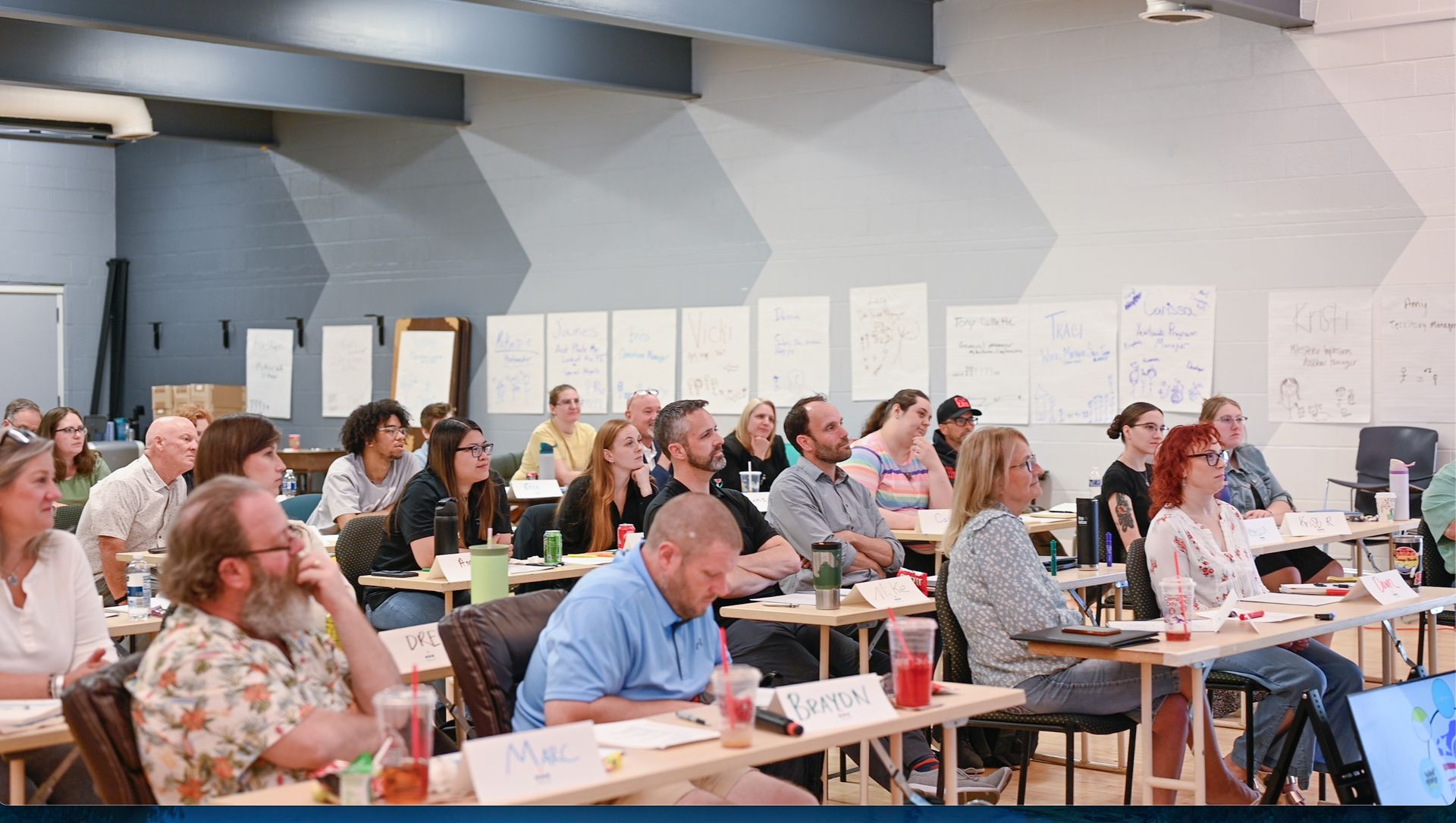
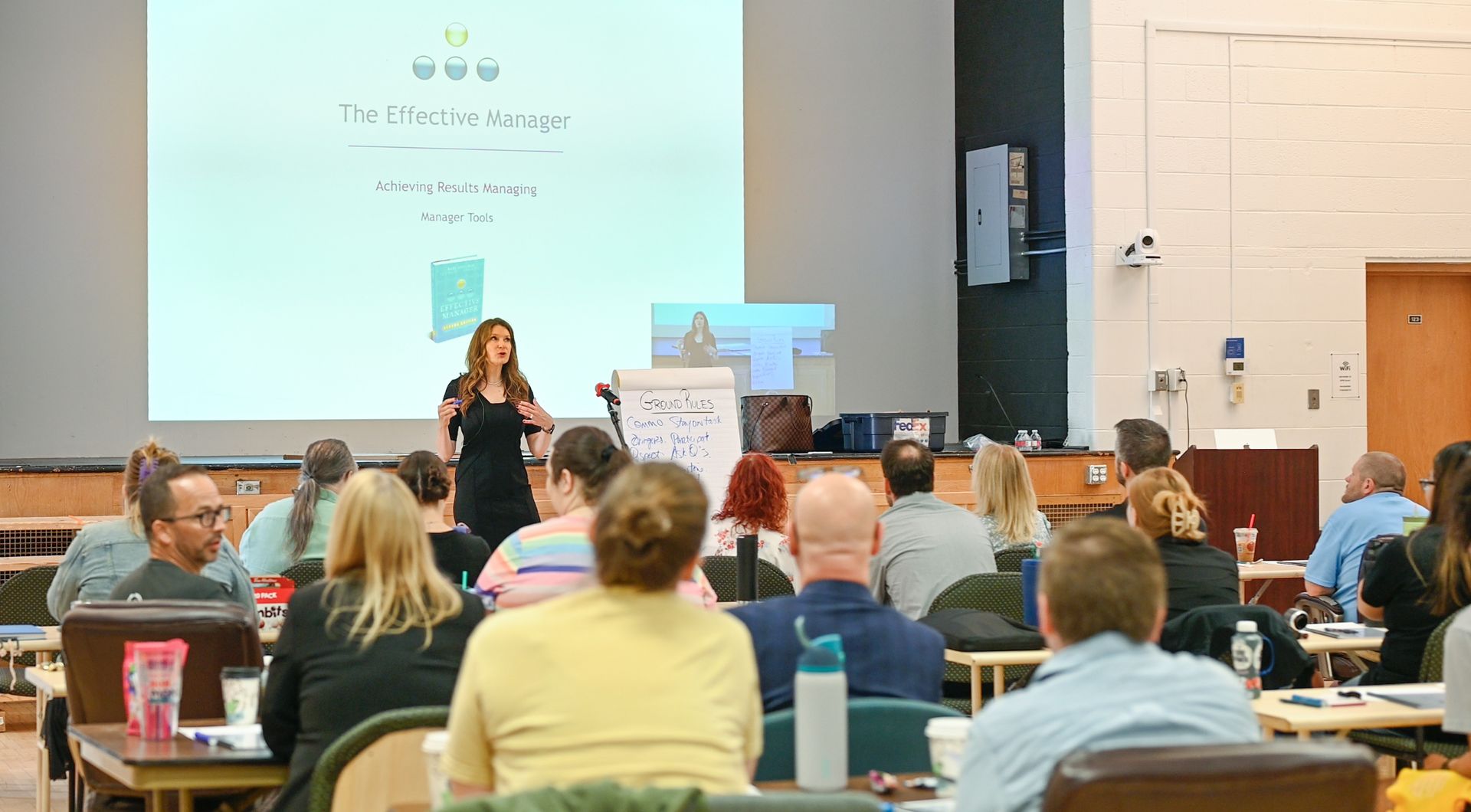
Our coach here at The Grad Team is Manager Tools. I've been listening to their podcasts since late 2005, and I credit a lot of my professional growth over the past 20 years to them. This year we brought Manager Tools to our Ypsilanti HQ to train a number of our full-time employees in person. These sessions are transforming our organization, helping all of us be better at our jobs, and helping us better support our teammates in doing theirs.
A shared vocabulary
We think about training in two buckets. Skill-based training covers things like how the field and operations teams work together on a commencement. Leadership and relationship training applies anywhere, whether you work in photography, software, or on admin—these soft skills are why so many of our schools love working with The Grad Team.
We made the leadership training company-wide on purpose so we'd come away speaking the same language. I can ask someone how their weekly one-on-one meetings are going, or how delegation is working now that we've grown, and they know exactly what I mean. Our directors and managers needed it a bit less, so we paid special attention to our leaders and up-and-coming leaders. As we keep growing, I want them ready for their next roles.
Speaking of “one-on-ones,” we instituted those this year as a way for direct reports to raise whatever matters to them. This saves everyone from the “got a minute?” interruptions, and provides employees a weekly arena in which they can discuss all things Grad Team. Most of the time we talk about business. Once in a while someone shares a personal matter that could affect their work. Those conversations only happen when the time is set aside, and I believe that's how an org chart becomes an organization of people who care about each other.
Planting trees
I studied photography, philosophy, art, and religion in college, which prepared me for plenty of things besides a paycheck. When I landed in management, I started listening to Manager Tools’ podcasts and reading voraciously. Manager Tools’ leaders Sarah and Mark Horstman like to remind me that I did all the work myself, to which I always reply: Yes, but I needed someone to show me the light so I could do it better.
One lesson I learned from Manager Tools that I use regularly is pre-wiring a meeting. Years ago, at a previous job, I was asked to build a strategic plan for our graduation business. Before I presented it to the wider group, I vetted it and got buy-in from senior leaders. This makes a meeting go much smoother, and I still use this approach here at The Grad Team every week. I share ideas with our leadership team ahead of a director meeting. That way, by the time we sit down, everyone has had a chance to digest it, and the conversation is much more fruitful and focused. Nobody likes to be surprised.
Why put so much into this now? I like to tell our staffers that, in golf terms, I’m on the 16th hole of my career. A lot of our fantastic team here has half—or more—of their careers ahead of them, and I want to give them tools they'll use long after I've hung it up. I think of it as planting trees whose shade I'll never sit in. They'll be blooming after I'm gone, and that’s the culture we’ve built at The Grad Team.
We'll be back next month with more. In the meantime, if a coach or a resource has shaped the way you lead, I'd love to hear about it.

Latest from the Stage
Insights and advice for your commencement day